‘Love Story: JFK Jr and Carolyn Bessette’ Review: Redundant Dress-Up
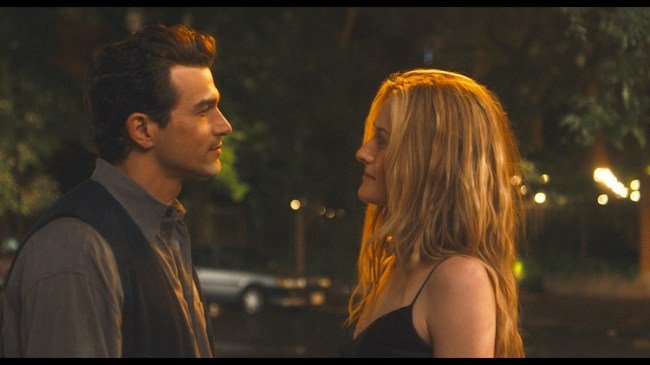
Late in “Love Story,” John F. Kennedy Jr. (Paul Kelly) and Carolyn Bessette-Kennedy (Sarah Pidgeon) are rocked by tragedy: Diana, Princess of Wales, has died in a car accident. Carolyn, who sees herself in the media-plagued victim, spots William and Harry on TV and says to her husband, “Those poor boys. At least they have each other. Like you and Caroline.”
“Like me and Caroline?,” JFK Jr. snaps back. “This is nothing like what me and Caroline went through. They’re princes. They’re members of a monarchy. I was three when my dad died, I grew up 60 blocks from here, I rode my bike to school — it’s night and day.”
Although Carolyn rightly pushes him to say more (which, in an all-too-rare moment of vulnerability, he does), John’s initial refusal to see himself in either mourning child says as much about the heir to Camelot — this onscreen version, anyway — as it does the series around him.


“Love Story‘s” JFK Jr. is simultaneously aware of his stature and oblivious to its effect on others. He can appreciate the hardships of living in the public eye, but not how it might feel for someone else to suddenly confront that same exposure. He’s trapped in the bubble he was born into, often by choice, and limits himself to fleeting glimpses of how he comes across to others. In other words, he’s a man of privilege; the ’90s king of nepo babies; an American prince.
True or false, founded or unfounded, the “contrast” he cites between himself and actual royalty is a lonely high point in “Love Story,” yet one that still magnifies the limited series’ myriad deficiencies. Created by Connor Hines and executive produced by Ryan Murphy, the latest in FX’s “Story” franchise is a largely sympathetic portrait of the doomed couple, framing the much-publicized relationship as two lost lovers against the world. But in inviting comparisons to “The Crown” — specifically, its dynamic depiction of Diana’s rocky assimilation into British nobility and the media firestorm that followed her every step of the way — “Love Story” doesn’t do itself any favors.
Does John and Carolyn’s tragic fairy tale have anything to tell us about fame and family that Charles and Diana’s didn’t? Not really. Does it evoke the intense feelings expected of a romance with a title as generic as an entire genre? Not at all. But does it prove its reason for being beyond such conventional aspirations as astute commentary and evocative characterizations?
Absolutely. “Love Story” wants you to remember — to point at the TV like Rick Dalton while projecting any actual feelings you once had about the real JFK Jr. and Carolyn Bessette onto their studiously designed, stoically rendered shells. It’s not correcting the historical record or reframing a publicly scrutinized marriage with the benefit of hindsight. It’s playing dress-up, and not very well.
Taking place between 1992-1999, “Love Story: John F. Kennedy Jr. and Carolyn Bessette” (a title written for robots if I’ve ever seen one) follows the couple from their first flirtation at a Calvin Klein event to their final ill-fated trip to visit his family. They’re mainly shown dealing with the onslaught of attention brought on by their coupling, as well as the ensuing expectations of the public, their friends, and their families. Episodes pivot around typical relationships milestones — their first date, their first fallout, their first kiss, etc. — even if they’re hardly the guiding focus.
Like many of Murphy’s shows, “Love Story” goes out of its way to drop famous names and re-stage infamous scandals. There’s JFK Jr.’s dating history (represented here by Daryl Hannah, who could win a defamation case based on how much this show hates her), Carolyn’s iffy first meeting with Ethel Kennedy (who’s equally disparaged albeit in far fewer scenes), the couple’s Battery Park blowout (I feel bad for the dog — all the dogs in “Love Story,” actually), and there’s even time for Marky Mark’s break-up with Calvin Klein (the brand, not the man, although Alessandro Nivola’s wispy portrayal turns the man’s undue screentime into an asset).

Like most of its franchise predecessors, “Love Story” is told as if the audience already knows every beat of the plot. The premiere episode’s opening flash-forward — set on the day of plane crash — breaks its somber tone when John’s office assistant pops in to say his sister-in-law is waiting downstairs. As the camera reveals a walking boot on his foot and flight plans on his computer screen, the score shifts to a jaunty instrumental number that seems out of place in the moment, but acts as morbid confirmation for those who know what’s coming: Yes, John F. Kennedy Jr. is about to die.
An omniscient perspective makes sense, to a certain extent, when examining people whose lives are as well-chronicled as the Kennedys. Relying on collective cultural context helps some of the thematic points resonate, like when Jackie Onassis (Naomi Watts) advises her son on the pressures of fame or when Ann Freeman, Carolyn’s mom (played by stealth MVP Constance Zimmer), warns her daughter about making her life smaller by marrying a larger-than-life figure. It’s easy to believe these conversations happened and, even if they didn’t, they provide a more natural form of foreshadowing — seeding ideas sure to blossom later on.
But a steady pulse of historical references isn’t the same as a heartbeat, and “Love Story” never pounds, races, or thrums like it should. The meta winks and nods toward what’s coming paired with the ongoing easter egg hunt for tabloid fodder makes it all but impossible for the series to fulfill its most basic function: intimacy. “Love Story” can’t capture John and Carolyn’s relationship with any flesh-and-blood humanity. It worships at the altar of reenactment, so when it’s time to depict the happenings that haven’t been splashed across the New York Post, the dolls don’t know what to do.
Their performers don’t exactly liven things up. Carolyn’s arc follows a woman who walked into a marriage she wasn’t prepared for, even when she thought she was. That may be true, but dramatically, it means repeating the same point over and over without much room for growth — so Pidgeon has nowhere to go. Whether Carolyn is cocky and scheming (like when John first enters her life) or anxious and isolated (as she becomes under the media’s pitiless scrutiny), she mainly comes across as uncomfortable. Pidgeon constantly tosses her hair, touches her face, and gestures in big, awkward motions, but instead of animating the old photos she’s tasked with recreating, she just looks trapped within them, fighting to get out.
If Pidgeon is too loose, Kelly, in his acting debut, is too tight. Like JFK Jr.’s perfect brown locks — impervious to “hat hair” even after a full day trapped under a beret — his presentation fits the dreamboat bill, but his interpretation is overly manicured. John’s politician’s polish can work as a character trait (just like Carolyn feeling hemmed in), but the acting has to transcend those superficial signifiers, and he’s rarely given the chance. When he does, the show can’t handle it. Kelly’s embodiment of a broken JFK Jr. — regressing to a scared little boy, complete with a baritone whine — is equal parts endearing, embarrassing, and honest.
It’s a shame “Love Story” runs away from these moments as fast as it can establish them, presumably because listening to a rich beefcake cry doesn’t fit its “sad-but-sexy” vibes. The same misplaced reticence can be seen with Carolyn. Her focused, stripped-bare gaze is effective, revealing the wounded heart she works so hard to protect, but even when her guard comes down, a clear picture never forms. The show can’t decide if Carolyn’s “a real one” or a gamer; John’s friends praise her for being grounded and relatable (compared to his former girlfriends), but she doles out dating advice like she’s reading from Cosmo and applies the same broad, arbitrary rules to her relationship, as if the only way to know how she feels is by keeping score. Toss in a smoking habit and penchant for fashion, and “Love Story’s” Carolyn Bessette feels closer to Carrie Bradshaw than any real person.
If you’ve seen “Sex and the City” and “The Crown,” there’s little reason to indulge in “Love Story,” unless expensive, serialized, non-interactive cosplay is your ideal form of entertainment. Even then, anachronistic dialogue (did people talk about “making space” for relationships in 1994?) and questionable costuming (it’s all so stiff and performative, when that era felt so slouchy and tactile) may break nostalgia’s spell. John and Carolyn’s romance may have been sullied by outsiders, but “Love Story” has the same problem: It never finds an honest way in.
Grade: C-
“Love Story: John F. Kennedy Jr. and Carolyn Bessette” premieres Thursday, February 12 at 9 p.m. ET on FX and Hulu with three episodes. New episodes will be released weekly through the finale (Episode 9) on March 26.